
C. F. E. Horneman
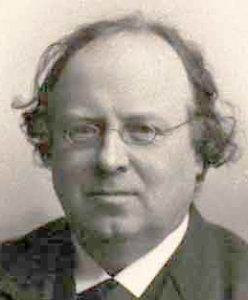
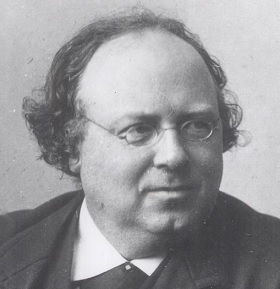
Christian Frederik Emil Horneman (December 17, 1840 – June 8, 1906) was a Danish composer, conductor, music publisher, and music instructor.
Horneman was born in Copenhagen, the son of the composer Emil Horneman.
 Already as a child, he wrote small operas with Asger Hamerik.
He was educated by his father and others and studied from 1858 to 1860 at the conservatory in Leipzig.
Here he met, among others, Grieg and had teachers such as Moscheles, Hauptmann, Jul. Rietz and others.
He returned home when his father had lost his money in a failed investment in the Alhambra theme park, which was a competitor to Tivoli.
Therefore, Horneman set up a music publishing house and a music store, which he let his father manage in daily life, while he himself provided part of the music (appears in the 2nd verse of Peter Faber’s Christmas song “Hvilken voldsom trængsel og alarm” (What a violent tribulation and alarm).
He wrote entertainments, opera fantasies, etc. under various pseudonyms and provided overtures and other orchestral music to Tivoli.
In addition, he wrote songs and other theater music for Casino and Folketeatret.
His production of concert hall music is limited, probably because “he now had to work alone for the profession for several years”, as stated in the Danish Biographical Lexicon.
He worked for many years on writing the opera Aladdin. In 1864 the overture was completed, but it was not until 1888 that the opera got its first performance at a gala performance for King Christian IX.
 It was only played 8 times. An Ouverture héroïque written in Munich in 1867 while on a study trip funded by the Anchorian Legacy is also highlighted as a fine work.
In addition, there is some acting music and the first part of larger stage work for text by Karl Gjellerup, Thamyris (Kampen med Muserne), however, was first performed at the Royal Theater in 1908, ie after his death.
The only orchestral work by Horneman that, in addition to the Aladdin overture, has remained in the repertoire to this day is the Gurre Suite.
It is composed of four movements from the stage music to Holger Drachmann’s drama Gurre, which premiered at the Royal Theater on 9 February 1901.
Together with G. Matthison-Hansen, Edvard Grieg, and others, he founded the music company Euterpe in Copenhagen in 1865, whose concerts he conducted.
This was a reaction against the ruling Music Association (Musikforeningen), which was run by Gade and Hartmann, and which in the opinion of the young composers was too conservative.
After his trip abroad, he sought to realize a favorite idea by arranging a series of cheap Saturday concerts in the Casino.
However, this initiative lasted only one season and then had to be abandoned due to deficits.
In 1872 and 1874, after his father’s death, he sold the music store and publishing house to Wilhelm Hansen.
In the same year, he founded together with, among others, Otto Malling and Jacob Christian Fabricius Koncertforeningen, whose concerts he conducted for 2 years alternately with Malling.
In 1876 he set up a “Music Course” in singing from the magazine.
It developed in 1880 into a well-attended music institute, which was to be an alternative to the Copenhagen Conservatory of Music.
Until 1920, this educational institution functioned, whose students (including Rued Langgaard) for the first many years benefited from Horneman’s great interest in pedagogy and significant abilities as an educator.
He was a fiery soul and full of energy and drive.
That Horneman enjoyed respect among the younger composers is shown by Carl Nielsen’s speech at the unveiling of the memorial for him at Assistens Cemetery on 13 May 1909.
Carl Nielsen characterizes Horneman as follows: “He was the Flame, the clear Flame, the playing Fire in Danish Music, the fire that melts all the false and consumes the false. ”
It was therefore not without reason that in 1888 he became titular professor and in 1906 Knight of Dannebrog.
In 1866 he married Louise Nannestad, daughter of Pastor Conrad Nannestad.
Angul Hammerich has written about his musical production that it was “not very large in scope, but all the more valuable in content, characterized by an exuberant wealth of ideas and great originality.”
Aladdin (1888), opera
Overture
Horneman studied in Leipzig, and the overture was performed by the Gewandhaus orchestra in 1867. The music is lively and colorful.
Here is a music video of the overture performed by the Danish National Radio Symphony Orchestra conducted by Michael Schønwandt.
Ballet music from Aladdin
In this video the music is performed by the Aalborg Symphony Orchestra conducted by Owain Arwel Hughes.
An abridged studio recording of Aladdin
Horneman worked on the opera project for decades. The first performance in Copenhagen included many cuts and was badly sung. A 1902 revival didn’t work out much better.
The complete opera has not been staged professionally since then and has never been recorded.
This video presents a studio recording (1953) comprising about half the music. The performance is by the Danish National Radio Symphony Orchestra conducted by Launy Grøndahl.
Soloists are: Ruth Guldbæk, soprano (Gulnare), Else Brems, mezzosoprano (Morgiane), Thyge Thygesen, tenor (Aladdin), Volmer Holbøll, baritone (Genie of the Ring), Einar Nørby, bass (Genie of the Lamp), Georg Leicht, bass (The Sultan), Holger Byrding, bass (Noureddin), and Holger Nørgaard, bass (The Vizier).
Gurre Suite
The Gurre Suite is composed of movements from the stage music to Holger Drachmann‘s drama Gurre, which premiered at the Royal Theater on 9 February 1901.
The following performance is by the Danish National Radio Symphony Orchestra and the Danish National Radio Choir conducted by Michael Schønwandt. Soloist is Guido Paevatalu.
Act I: Man siger, Syden har Kvinder. Video.
Act I: Allegretto. Video.
Act II: Prelude – Allegretto. Video.
Act II: Lento molto – Allegro con moto. Video.
Act II: Ingen Svale mod Sønder kan vel flyve saa fort. Video.
Act II: Jeg havde mig en Datterlil saa let paa Taa! Video.
Act II: Dagen over er Du rig. Video.
Act IV: Prelude – Largo. Video.
Act IV: Af Arv og Gæld i mange Led. Video.
Act V: Prelude – Allegro non troppo. Video.
Act V: Hallo, hallo, hallo!. Video.
–
Ouverture héroïque
This was written in Munich in 1867 while on a study trip.
In the video, the ouverture is performed by Danish National Radio Symphony Orchestra conducted by Michael Schønwandt.
–
Kalanus, selections from the incidental music (1890)
Music to the tragic poem Kalanus by the Danish poet Frederik Paludan-Müller.
I. Introduction and prayer: Andante sostenuto – Andante
II. Festive music and the sentencing of Kalanus: Allegri vivace – Andantino
III. Alexander: Allegro con fuoco
IV. Kalanus in feverish dreams
V. Introduction to Act V (Death of Kalanus): Molto maestoso
The video presents a performance by the Danish National Symphony Orchestra conducted by Johannes Gustavsson.
–
Esther, Act I: Melodrama
This was inspired by the verse drama Esther by Holger Drachmann.
In this video, the music is performed by the Aalborg Symphony Orchestra conducted by Owain Arwel Hughes.
–
Kampen med Muserne (The Battle with the Muses)
This is the first part of a larger stage work based on the text of Thamyris (The Battle with the Muses) by Karl Gjellerup. It was first performed at the Royal Theater in 1908, i.e. after Horneman’s death.
Performed by the Danish National Symphony Orchestra and the Danish National Vocal Ensemble conducted by Johannes Gustavsson.
I. Soloppgang (Sunrise) : Andantino – Tranquillo quasi ad libitum. Video.
II. Muse-Kor (Chorus of the Muses). Video.
III. Satyrdans (Dance of the Satyrs) : Andantino. Video.
IV. Bakkantisk dans (Bacchanale) : Allegro con brio. Video.
–