
Friedrich Kuhlau
Friedrich Daniel Rudolf Kuhlau (11 September 1786 – 12 March 1832) was a Danish pianist and composer during the late Classical and early Romantic periods.
He was a central figure of the Danish Golden Age and is immortalized in Danish cultural history through his music for Elves’ Hill, the first true work of Danish National Romanticism and a concealed tribute to the absolute monarchy.
To this day it is his version of this melody that is the definitive arrangement.
During his lifetime, Kuhlau was known primarily as a concert pianist and composer of Danish opera but was responsible for introducing many of Beethoven’s works, which he greatly admired, to Copenhagen audiences.
Kuhlau was a prolific composer, as evidenced by the fact that although his house burned down, destroying all of his unpublished manuscripts, he still left a legacy of more than 200 published works in most genres.
Kuhlau was born just south of Lüneburg in the Uelzen district of Lower Saxony (Germany).
At the age of seven, he lost his right eye when he slipped on ice and fell.
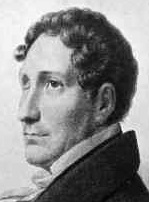 His father, grandfather, and uncle were military oboists. Even though Kuhlau was born to a poor family, his parents managed to pay for piano lessons.
In 1802 he moved to Hamburg where he began learning the piano with scholar C.F.G Schwencke.
In 1804, Kuhlau made his debut and began working as a concert pianist. It was around this time that he began composing songs and chamber music to earn money.
Many of Kuhlau’s compositions throughout his life were for the flute, though he himself did not play the instrument.
In 1810, he fled to Copenhagen to avoid conscription in the Napoleonic Army, which overwhelmed the many small principalities and duchies of northern Germany.
In the same year, Kuhlau published his first piano and flute compositions.
Kuhlau made a living in Copenhagen as a piano teacher and composer in 1811.
He was later appointed as a non-salaried musician in the Danish Court in 1812. Kuhlau eventually became a Danish citizen in 1813.
Following the success of his singspiel, The Robber’s Castle, Kuhlau gained a high-paying position as a singing teacher at the Royal Theater in 1816.
Kuhlau’s works between 1817 and 1820 failed to gain much prominence. His opera, The Magic Harp, was said to have failed due to a controversial libretto.
In 1821 and 1825, Kuhlau traveled to Vienna where he befriended Ludwig van Beethoven.
Beethoven’s influence is evident in Kuhlau’s later works such as his singspiel, Elves’ Hill, a work widely regarded as a tribute to the Danish Monarchy and an inspiring piece from the Danish Golden Age.
In 1828, Kuhlau was awarded an honorary professorship.
Kuhlau had his breakthrough in 1814 at the Royal Danish Theatre with Røverborgen (“The Robbers’ Castle”), a singspiel with a libretto by Adam Oehlenschläger.
His next few dramatic works, including Trylleharpen (1817), Elisa (1820), and Hugo and Adelheid (1827), lacking drama, failed miserably.
With Lulu from 1824 he finally once again experienced success with one of his singspiels.
He also wrote music for performances of William Shakespeare’s plays.
In 1828 he achieved his greatest success when he wrote the music for Elverhøj.
It won immediate popularity, especially for its overture and the final royal anthem, his setting of Kong Christian stod ved høien Mast (King Christian Stood by the Towering Mast).
In the music, Kuhlau made very effective use of Danish and Swedish folk tunes.
Alongside his dramatic works, Kuhlau wrote several compositions for flute and a large number of works for piano.
Particularly his short pieces, sonatinas, for piano, enjoyed great popularity both in Denmark and abroad.
Beethoven, whom Kuhlau knew personally, exerted the greatest influence on his music.
Kuhlau’s C major Piano Concerto, Op. 7 from 1810 displays a strong influence from Beethoven’s Piano Concerto No. 1 in C major, written 14 years earlier.
All three movements of the work are strongly reminiscent of the corresponding movements in Beethoven’s work, making it a musical pastiche.
In addition to the above-mentioned piano concerto were a string quartet and several works for piano that included all the current genres of the day: sonatas, sonatinas, waltzes, rondos, and variations.
He also created several works for strings with piano (three quartets and two quintets, and several violin sonatas), works of incidental music, and several operas.
However, his most often recorded and played works are several piano sonatinas and numerous works for flute.
It is because of these flute works that he was nicknamed “the Beethoven of the flute” during his lifetime.
–
Ouverture of Elverhøj / Elves’ Hill, Op. 100
By far the most famous work Kuhlau ever composed was the incidental music to the romantic festive play Elverhøj (The Elves’ Hill) written in 1828 for a royal wedding, and since then it has been the most often performed play in the Danish repertoire.
Its highly poetical atmosphere is enhanced by the use of old Danish and Swedish folk tunes, skilfully arranged and imitated by Kuhlau, not least in the grandiose, typical potpourri overture which contains many melodies from the play.
The Overture concludes with the tune Kong Christian stod ved højen mast (King Christian [IV] stood by the lofty mast), which later became the Danish national anthem.
In the video, the overture is performed by the Danish National Radio Symphony Orchestra conducted by Michael Schønwandt.
–
Complete performance of Elverhøj / Elves’ Hill, Op.100, Comedy in five acts
In this video is a complete musical performance of Elverhøj (Elves’ Hill), which is a comedy with music in five acts. It was first performed on 6 November 1828 at the Royal Theatre in Copenhagen. The libretto was by Johan Ludvig Heiberg.
The performance is by the Danish National Radio Symphony Orchestra and the Danish National Radio Choir conducted by John Frandsen. Soloists are Bodil Gøbel, soprano (Elisabeth), Mogens Schmidt Johansen, baritone (Mogens), and Gurli Plesner, alto (Karen).
The sections are as follows:
Ouverture 00:00
Melodrama 11:18
Romance: Jeg gik mig i lunden (Karen) 14:13
Romance: Jeg lagde mit hoved (Karen) 18:52
Chorus: Hurtig til lystig fest (Peasants) 21:17
Romance: Nu løvsalen skygger (Elisabeth) 22:34
Romance: Der vanker en ridder (Elisabeth) 23:39
Ballade with chorus: Nu lider dagen (Mogens) 26:27
Romance: Dybt i havet (Karen, Mogens) 30:43
Chorus: Nu de lensmanden bort vil drage (Peasants) 33:31
Chorus: Herligt, en sommernat (Hunters) 35:12
Ballet “Agnetes dröm” / “Agnetes dream” 36:52
Menuetto 43:01
Contra dance 47:25
Polonaise 48:48
Children’s dance 51:13
Pas de huit 52:51
Ecossaise 55:57
Garland’s dance 57:12
Fanfares 58:31
Chorus: Beskærm vor Konge 58:59
Ouverture of William Shakespeare, op.74a, play with music in four acts
Kuhlau wrote a very poetic, fairy-like incidental music to the Danish romantic drama William Shakespeare (1826) by Caspar Johannes Boye, dealing with a legend from the great English playwright’s youth about his poaching and rivalry with the local squire.
It was written in the same year as Weber’s Oberon and Mendelssohn’s Overture to A Midsummer Night’s Dream. In the Overture, we can see most clearly the influence of Beethoven.
The long, truly Romantic introduction has a fine horn solo and strong repeated chords, surely inspired by the six chords in the first movement of Beethoven’s Eroica Symphony.
It leads directly into a fast section (in 6/8 time), introduced by a fugato reminding us of Mendelssohn. Later on, Weber comes to mind, but for all that, it is genuine Kuhlau, and it has a great dramatic impact, culminating in a masterly development section.
In the video, the overture is performed by the Danish National Radio Symphony Orchestra conducted by Michael Schønwandt.
–